As structural engineers design taller and more material-efficient buildings, structural dead load becomes a primary cost driver. Traditional natural full-bed stone cladding imposes an enormous structural burden—frequently exceeding 40 to 55 lbs/ft² (195–268 kg/m²). This massive mass requires oversized reinforced concrete perimeter grade beams, heavy structural steel shelf angles at every floor line, and seismic tiebacks that significantly inflate structural steel framing packages.
By switching to Adhered Manufactured Stone Veneer (AMSV) meeting ASTM C1670, dead weight is reduced to less than 12 lbs/ft² (58 kg/m²). The foundational chemistry enabling this performance is rotary kiln expanded shale aggregate technology.
Tianya manufactures stone veneer utilizing lightweight aggregate produced from select illite and montmorillonite clay shales. Raw shale is crushed and fired in high-temperature rotary kilns at approximately 2,050°F (1,120°C). At this semi-plastic thermal stage, internal organic compounds decompose and release microscopic gas bubbles that expand the shale into a vitrified, cellular structure.
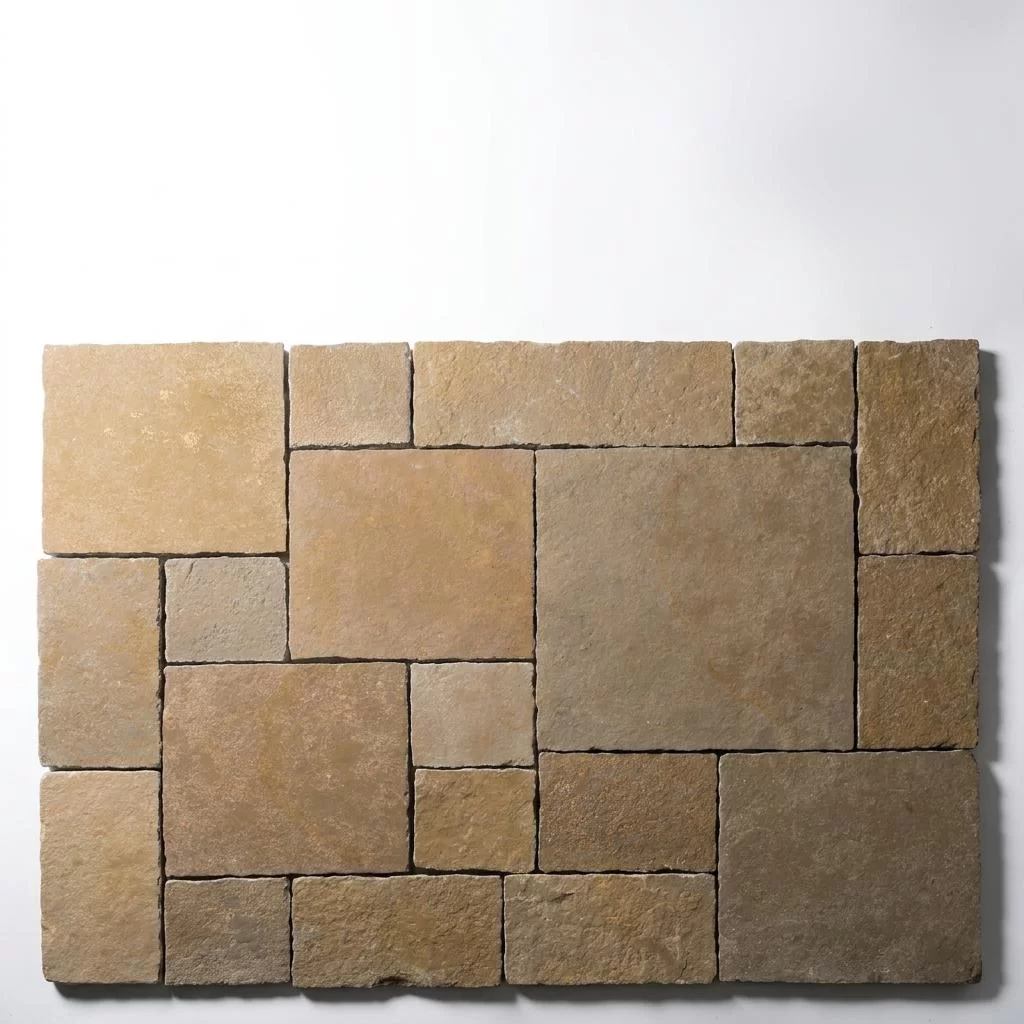
To examine the architectural application of our lightweight matrices, view our TerraStone Natural Earth-Tone Sandstone.